
Select Essays

Gay Men Like Me
The Good Men Project
Ben Shaberman discovered something interesting about himself when he moved to Miami Beach in the late 1990s.
Women don’t notice me. I’m short. I often have red blotches of eczema on my forehead. And, I’m not quick witted during random encounters with the opposite sex at a coffee shop or the dry cleaners.
This High
Published in Empty Mirror 2014
My first attempt at rolling a joint was rather pathetic. It looked more like a small turd covered in paper than something to be smoked. And not knowing to remove the twigs and seeds — of which it had many — the loosely rolled number disconcertingly popped and crackled each time I took a hit of it.
-
My first attempt at rolling a joint was rather pathetic. It looked more like a small turd covered in paper than something to be smoked. And not knowing to remove the twigs and seeds — of which it had many — the loosely rolled number disconcertingly popped and crackled each time I took a hit of it. Was there something wrong with the pot? Had I been ripped off by the dropout with a scraggly beard and small Japanese motorcycle who sold nickel bags every morning behind the high school library? Given that it was the first time I was getting stoned by myself — i.e., sans any technical assistance — I would just have to make do. “Hopefully, this shit is good,” I muttered to myself as I drew in the harsh smoke from the burning weed.
The inspiration to party solo was prompted by my purchase that afternoon of “Wish You Here,” Pink Floyd’s follow-up to its brilliantly mind-blowing “Dark Side of the Moon” LP. Truth be told, I was yet to know much about the group other than its hit single “Money,” which was more or less a stand-alone pop tune from Dark Side and unlike the group’s iconic long tracks — some of which took up entire album sides and featured foreboding ticking and crashing sound effects, soaring guitar solos, and smatterings of haunting and disturbing voices.
I chose “Wish You Were Here” merely because it was the group’s latest album. I had little idea what I was getting into, and even my new pot-smoking comrades at school weren’t talking about it yet. As a sophomore beginning my fourth school in five years — my single mother and I were quite nomadic in the early 1970s — I felt a sudden urgency to move beyond pop-rock hits like “You’ve Got a Friend,” “Saturday in the Park,” and “Frankenstein,” and into music that was more edgy and dangerous to solidify my standing with what I considered to be the most interesting kids in my class.
I’d also become bored with the remaining trappings of my childhood — stamp collecting, my Saturday-morning bowling league, and building plastic models of horror-film action figures. Certainly, these pastimes were not earning me any street cred nor did they attract the attention of girls. I was ready to experiment and take some risks.
While I partook in my one-person marijuana party, my mother and her friends played Mahjong, their Tuesday night ritual in the dining room of our small suburban condo. As long as the game tiles kept clicking and clacking, I knew I was under the adult radar.
To enhance the mood, I replaced the standard light bulb in the ceiling fixture with a black light, which gave my cramped bedroom the feel of an ultra-violet, alternate universe. Everything white glowed — the bed sheets, the window shades, my skin. The Creature from the Black Lagoon model standing on my dresser — its mouth agape and scaly arms raised to attack — looked at home in the muted light.
After tearing the wrapper off the album, I momentarily pondered its cover — a photograph of two men in suits shaking hands, one aflame. I didn’t give much thought to the image’s symbolism, a jab at the record business. It just looked pretty cool to me. Then I pulled the shiny black vinyl disc from its sleeve and put it on the spindle of my hand-me-down record player — just a turntable in a carrying case — and carefully placed the needle on the outer edge as it spun around at 33 1/3 rpm. At first, I thought something was wrong with the stereo, because the music was barely audible. But the slow ethereal fade-in from a synthesizer grew steadily louder and more complex. With the ultra-violet ambiance of my room, and the joint kicking in, I began to feel like I was drifting through interstellar dust — in a state of being without dimensions or boundaries. Finally, after what seemed like ions, a bluesy guitar riff!
Unlike the straight-ahead rock-and-roll albums I had become acquainted with in early adolescence, “Wish You Were Here” is much more than a collection of four-minute songs. It’s a journey — an arrival, a transformation, and a departure — with the epical “Shine on You Crazy Diamond” providing the record’s arc, its intro and outro, and its rise and fall. The two halves of Shine On, which are subdivided into spacious guitar, keyboard and sax solos, run for 26 of the record’s 44 minutes and could have worked as an album unto itself.
The three songs flanked by “Shine On” — “Welcome to the Machine,” “Have a Cigar,” and “Wish You Were Here” — are more accessible because of their obvious melodies and conventional instrumentation. However, their abrupt phrase changes and driving percussive elements let us know that things aren’t going to exactly work out for the “you” of the album. These lyrics leave no doubt:
Come in here, dear boy,
Have a cigar, you’re gonna go far,
You’re gonna fly high, you’re never gonna die,
You’re gonna make it if you try,
They’re gonna love you.
The title track, a beautiful melancholic ballad, gently hands us off into the whooshing wind, back to Shine On, and out into the cosmos from whence we came.
As musically virginal as I was, I didn’t initially appreciate the record’s thematic cohesiveness. It took months, even years, for me to completely grasp the sophistication of “Wish You Were Here.” At 15, I simply wasn’t “there” yet. But I must have listened to the album three times that night in my little netherworld of purple light and smoke, enjoying the atmospheric music and the Zen of being stoned.
Unbeknownst to me, “Wish You Were Here” had been a struggle for Pink Floyd. As rock historians report, the group had been exhausted and overwhelmed by the success of “Dark Side of the Moon,” making it difficult to summon their creative energies for a follow-up record. And, there was the proverbial infighting and battles for control that often come with artistic collaborations. Though they would cut three more albums in the coming years, “Wish You Were Here” is considered to be the beginning of their end.
While the record reflected on the band’s own loss of self, it was also a tribute to Syd Barrett, a psychedelic music pioneer who founded the group, but left in 1968 during a hallucinogen-induced breakdown.
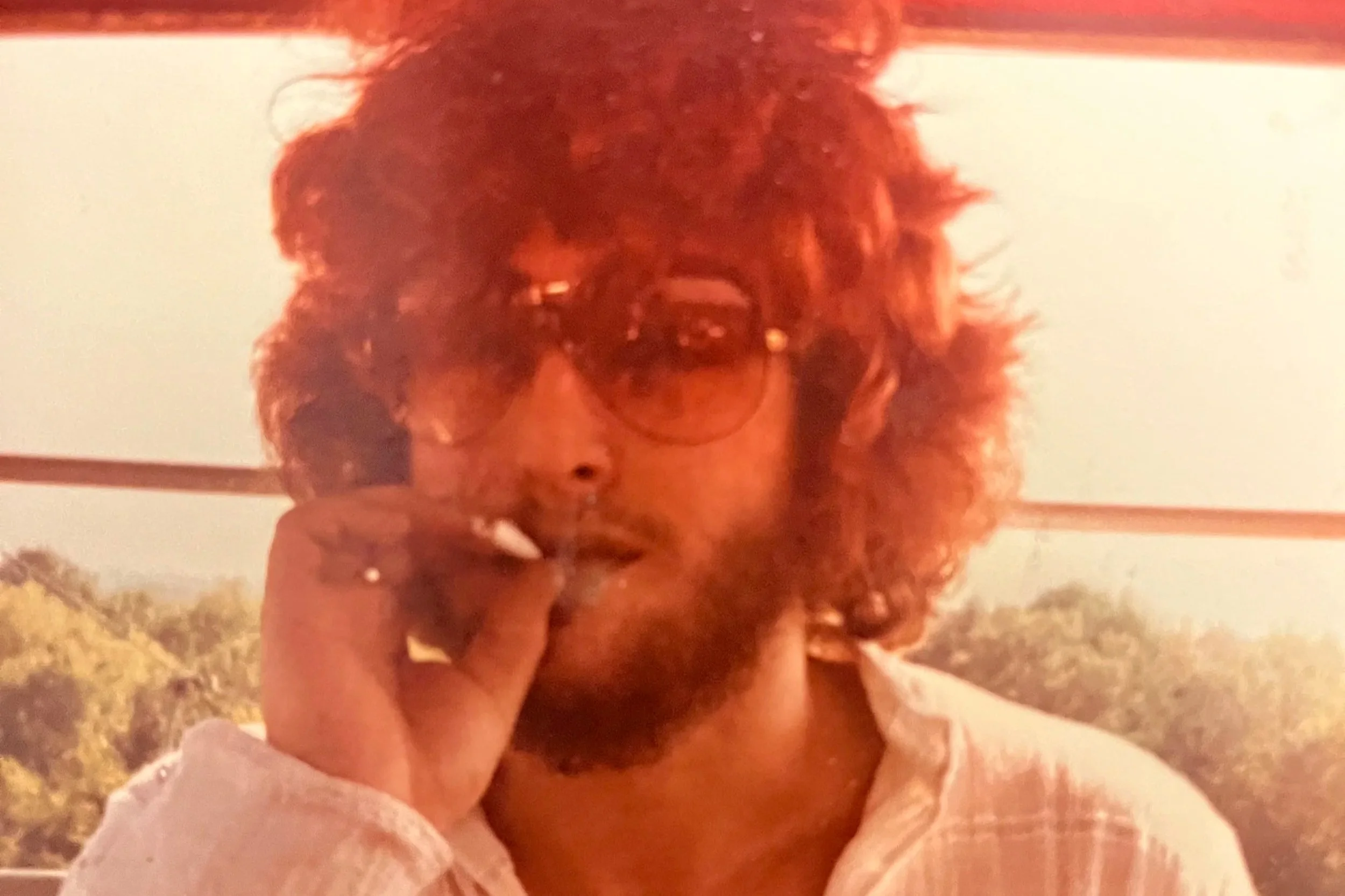
Ironically, I was just beginning my own downward spiral — into stonerdom. In the coming weeks, I became a ghost of my former self, and remained buzzed for the next five years. In addition to smoking weed three times a day, I grew long hair and a beard, donned Frye boots and an army jacket, and spent much of my free time driving around with friends, listening to FM rock stations.
The high life for me was less of a conscious decision and more of a path of least resistance. It provided me with a clear identity of who I was and who my friends were. And perhaps most of all, I liked being stoned, breezing through the day whether I was in English class, working as a pump jockey at the local Shell station, or cruising the unremarkable streets of Mayfield Heights, Ohio. Fortunately, I didn’t dabble much in harder stuff like cocaine, LSD, or heroin; reefer was not a gateway drug for me. In fact, I never even liked alcohol, because of the clumsiness and loss of control it brought on. Getting mellow from weed was just right for me.
Eventually, the academic rigors of college brought me down from the clouds — I landed with a thud — and my romance with marijuana came to an end. Normalcy was a difficult adjustment — I often felt depressed and occasionally paranoid for the next year or so. But I was too damned scared of going nowhere had I continued the party. I suspect that my maturing frontal lobe — the part of the brain that considers the future consequences of present actions — finally kicked in. I cut off much of the hair from my head and face, lost weight, and began focusing on a career in computers. While I’ll never know what would have happened had I chosen a straighter path through those formative years — perhaps destined to become U.S. Senator Shaberman? — I survived being a pothead without too much irreparable harm.
But, I’ll always fondly remember that inaugural night in my black-lit bedroom with an exquisite buzz and the sonic wonder of “Wish You Were Here” in lo-fi. It was also when I experienced my first case of pot-induced munchies. They hit hard, so I headed for the kitchen to nab one of the custard-filled éclairs my mother brought home that evening from the local Jewish bakery. Well before I reached the dining room, I realized I was far more wasted than I had thought. I felt like Neil Armstrong taking his first steps on the moon. Who turned the gravity off? I was ripped! But I was determined to keep my shit together.
After floating by my mom and four other menopausal Jewish women sitting at a card table filled with Mahjong tiles, I heard the screech of “Benny! I haven’t seen you in years! You’re so BIG!” It was Hilda, who made up for her diminutive stature with the vocal cords of a Pteradactyl.
“I remember when you were only this high!” she said holding her hand, palm down, about two feet off the ground.
“I’m much higher now,” I replied, grinning sheepishly as I reached into the large brown paper bag filled with delectable bakery.

Slow learner now gets being Jewish
Chicago Tribune, March 30, 2007
On Labor Day in 1969, at the age of 8, I broke into Taylor Road Elementary School in Cleveland Heights, Ohio, with six other kids and vandalized the school’s library, restrooms and teachers lounges. The opening of school was delayed for three days because we did such a good job of tearing the place apart.
-
On Labor Day in 1969, at the age of 8, I broke into Taylor Road Elementary School in Cleveland Heights, Ohio, with six other kids and vandalized the school’s library, restrooms and teachers lounges. The opening of school was delayed for three days because we did such a good job of tearing the place apart.
Ironically, the chief mastermind of the destruction, an older boy and well-established neighborhood troublemaker, lived across the street from Taylor, and his mother called the police when she spotted some kids hanging out of the school’s windows. Without realizing it, she busted her own son along with the rest of us.
As the youngest and smallest of the proclaimed juvenile delinquents — and the only one who bawled hysterically throughout the court hearing — the judge went easy on me. I got off with trespassing, probation and a $25 fine.
However, my divorced parents, in a rare collaborative moment, were not so lenient. They sentenced me to Hebrew school. What better way to keep little Benny off the streets and get him in touch with his Jewish heritage?
And so began what was supposed to be my path to Judaic enlightenment.
For the next three years, I attended afternoon Hebrew school four days a week. While most of my friends, even the Jewish ones, were playing baseball, going to the candy store or watching “The Three Stooges” on TV when they got home from school, I was getting on a bus to go learn a language that moves across the page in the wrong direction and uses vowels optionally.
Why couldn’t I have been just a neglected latch-key kid?
At my Hebrew school, there was no show and tell, no games, no movies — just the rote memorization of the Hebrew language and Torah study. We also learned about the ancient characters in Jewish history: Abraham, Isaac, Judah and the Maccabees, King Solomon and Queen Esther. And though “The Three Stooges” all were Jewish, they unfortunately weren’t part of our stimulating curriculum.
Neither of my parents ever did much to reinforce our Jewish heritage at home, though my family did celebrate Passover. The highlight of our Passovers was the ceremonial meal called the seder. For many hours, my family would discuss and taste each symbolic, mouthwatering item on the seder plate, which included parsley, horseradish, a bone and a boiled egg. With a few strips of bacon, the seder plate would have made the perfect meal for the Atkins diet.
During our seders, there also was discussion of the 10 plagues believed to be a punishment from God that befell the Egyptians for their enslavement of the Jewish people. These plagues ranged from frogs to boils to slaying of the firstborn. My innovative family developed its own plague for the seder: chain-smoking. We took the “slaying of the firstborn” concept to a new level: “Slaying of anyone breathing.”
My relatives spent the rest of the evening kibitzing — mostly complaining about the hippies and President Nixon. “They’re all meshugeh,” my grandfather would groan as he tapped his cigarette on the side of an overflowing ashtray.
The final stage of my formal Jewish education took place in beautiful Pompano Beach, Fla. I moved there in 1972. Though there was a local synagogue, there was no Hebrew school, per se — only Sunday school. So my sentence was immediately cut by 75 percent — just one day a week instead of four!
My parents’ plan at that point was to get me to learn just enough Torah so I could have a bar mitzvah and officially become a Jewish man. I had a different plan.
As they say in real estate, it comes down to location, location, location. Our apartment complex in Pompano happened to be just a few blocks away from a canal teeming with fish. And our unit happened to be next to the home of Rick, a nice gentile boy who loved to fish as much as I did.
After my many months of Sunday morning angling expeditions with Rick, my mother was notified that I rarely showed up for class. At that point, she and my dad threw in the towel — they gave up on the bar mitzvah plan. I was freed from bondage! It was like my own personal Passover.
For the next 30-plus years, I never looked back. I occasionally got dragged to synagogue by a girlfriend, but the operative word there is dragged. I even played in a Jewish softball league for a few years, but the operative word there is softball.
However, a recent chance encounter with a charming woman named Bluma Shapiro gave me a new perspective on being Jewish. I never actually met Bluma; I only heard her briefly on a radio program during my lunch hour.
Bluma described her miraculous story of survival during the Holocaust. She talked about how the Nazis occupied her hometown of Bialystok, Poland; how she unsuccessfully tried to hide from them in an underground system of bunkers; how she regularly saw Jews shot at point-blank range for the most arbitrary reasons; how she ended up being a prisoner in five concentration camps, including the infamous Auschwitz; and how after liberation, she returned to Bialystok to learn that every single member of her immediate family had been killed.
While I was listening to Bluma, it occurred to me for the first time that the Holocaust was never discussed during my Hebrew school career. For that matter, no one in my immediate family — parents, grandparents, aunts, uncles — ever talked about it either. Did they think the story was too shocking for a growing boy — at a time when that boy was watching graphic footage of the Vietnam War and civil rights movement every day on prime-time television?
It also occurred to me that the Holocaust ended just 16 years before I was born. When I was a kid, 16 years seemed like an eternity. World War II was ancient history to me. But now, at 46, it gives me chills to think that the Holocaust ended just 16 years before my arrival on this planet.
I was incredulous to realize that my Jewish elders chose not to educate me about a period in our history that was so incredibly horrifying on such a grand scale. Furthermore, unlike those familiar stories from the Old Testament — those greatest hits from Hebrew school — the Holocaust is very recent history. There are even eyewitnesses like Bluma Shapiro still alive to tell the gruesome tale.
Bluma is in her mid-80s, but still spends a lot of time talking to school groups about her experiences.
“Though it takes a lot out of me, I believe the reason for my survival is I have to talk about it,” she says. “People say it didn’t happen. I lost my whole family — my parents, five siblings, aunts, uncles. No one survived. This is why I have to talk about it — no matter how much it costs me emotionally and psychologically.”
Despite my parents’ best intentions, I never developed much of an appreciation for my Jewish heritage. I doubt I’ll ever have the urge to attend Sabbath services, buy a yarmulke or lead a Passover seder. I have no regrets about balking at that sacred rite of passage, the bar mitzvah.
But thanks to Bluma Shapiro’s remarkable story of survival and courage, and her tireless conviction to keep on telling it, I am beginning to understand what it means to be a Jewish man.

Small Talk With The Dying
Months to Years
When I first walked into Joe’s room, all I could think was, “Why the hell did I sign up for this gig?”
He was one of my first patient encounters as a hospice volunteer, and he was barely clinging to life. I was asked to read to him. He was a large-framed, middle-aged, lightskinned African-American, likely to pass away within the next day or so. Sadly, he had no friends or family visiting him. He just lay motionless and unconscious on the bed, drawing slow, shallow breaths.
Unstoppable: How a seminal bus ride led me toward manhood
The Good Men Project
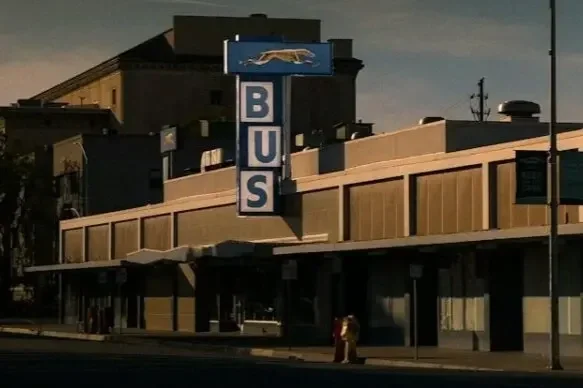
On a weekday morning in July 1979, I stood in the dim and decrepit Cleveland Greyhound Bus Station thinking only about my destination: First Federal Savings and Loan in Ft. Lauderdale. The S and L held my $10,000 savings account, the money I needed to begin my freshman year at Tulane University in New Orleans. Classes would start in about five weeks.
Commentary: Worthless
National Public Radio: Morning Edition
Commentator Ben Shaberman says his recent experience with the stock market has allowed him to deal with reality and move on.